Un nou fàrmac contra la malària
Científics de l'Institut de Recerca Biomèdica de Barcelona han aconseguit curar la malària en ratolins. Aquesta malaltia mata cada any a 600.000 persones a tot el món.
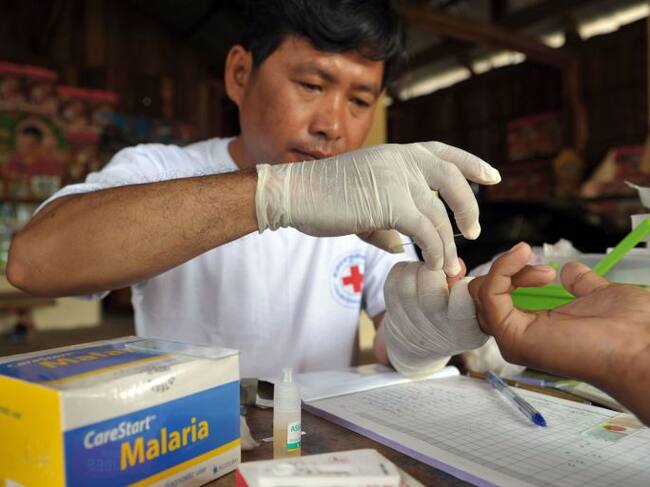
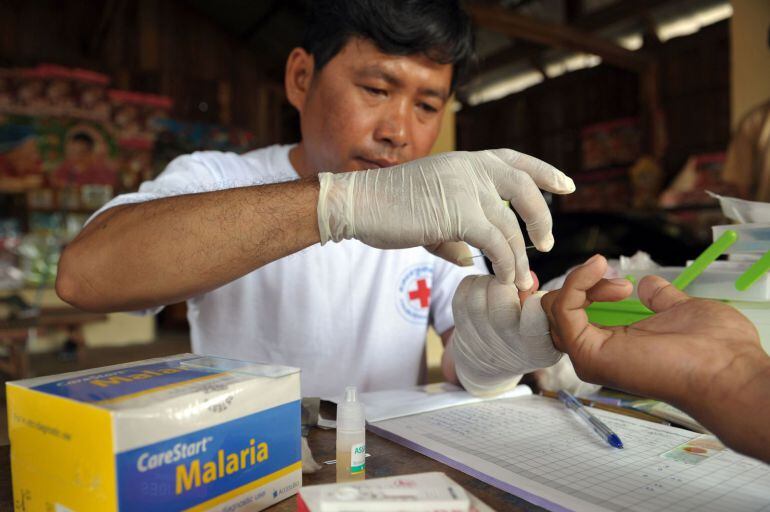
TO GO WITH AFP STORY BY ALICE RITCHIE (FILES) -- A file picture taken on July 5, 2012 shows a village malaria worker carrying out a blood test at his home in Pailin province, some 350 kilometers northwest of Phnom Penh. The number of people dying from malaria has almost halved since 2000, although progress in west Africa risks being reversed by the Ebola outbreak, the World Health Organization said on December 9, 2014. Global mortality rates fell by 47 percent between 2000 and 2013 and by 53 percent in children under the age of five, the WHO said in its annual report on the disease. AFP PHOTO / TANG CHHIN SOTHY / TANG CHHIN SOTHY (AFP)
Barcelona
Un grup de científics de l’Institut de Recerca Biomèdica de Barcelona ha trobat un nou fàrmac que combat la malària en ratolins. A més, per primera vegada a la història, han aconseguit gravar l’efecte d’aquest fàrmac al sistema immunitari dels ratolins per fer front a la malaltia en futures infeccions.
El resultat d’aquesta investigació s’ha publicat a la revista de l’Acadèmia Nacional de Ciències d’Estats Units. Lluís Ribas, el científic de l’Institut de Recerca Biomèdica de Barcelona que ha liderat aquesta recerca, destaca que “l’avenç científic és molt important perquè el paràsit que provoca aquesta malaltia s'ha fet resistent al tractament més utilitzat fins ara”.
Aquest nou fàrmac ha curat el 100% dels ratolins amb els que s'ha provat, però ara queda el més difícil: provar la seva eficàcia en humans.
La malària és una de les malalties més greus del món amb 200 milions de casos i 600.000 morts anuals.


